






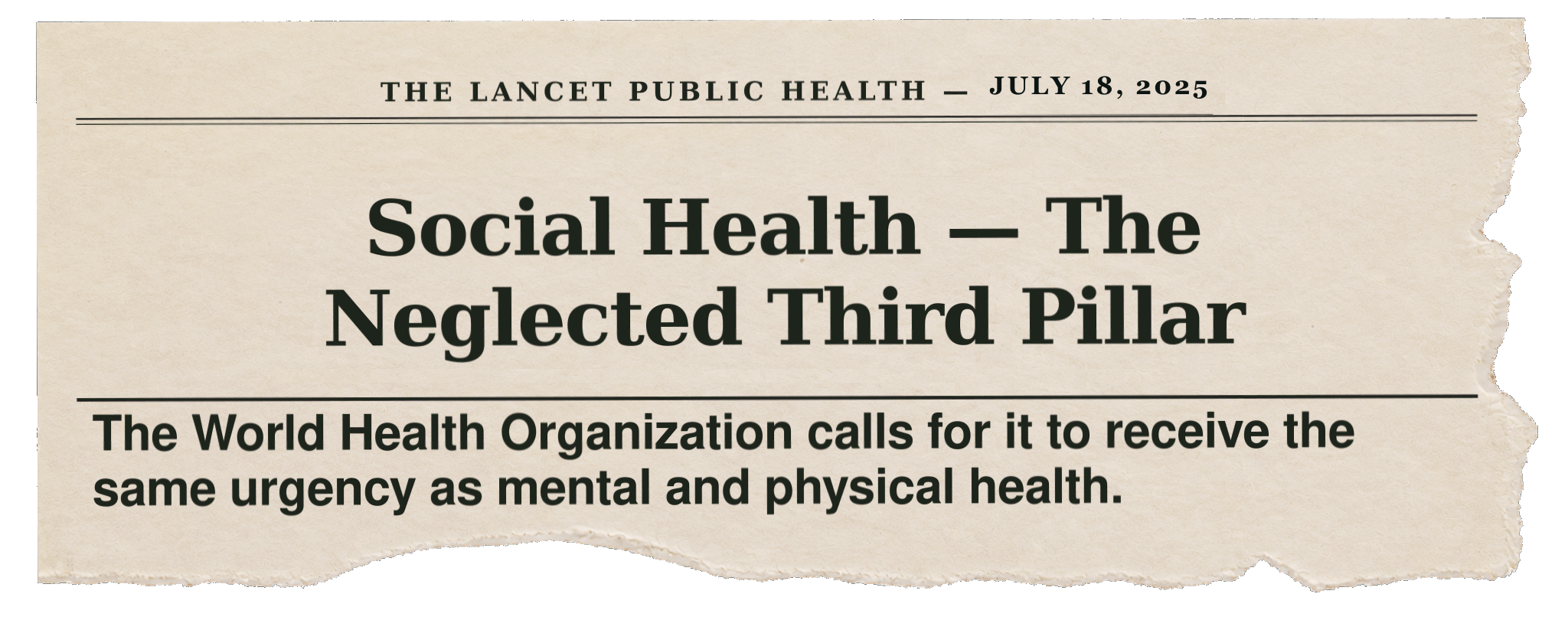
Lacking social connection is as dangerous as smoking 15 cigarettes a day.
Relative odds of premature death by risk factor
 makes it easier to invest in the relationshipsyou care about with minimal screen time.makes it easier to invest in therelationships you care aboutwith minimal screen time.makes it easier to invest in the relationshipsyou care about with minimal screen time.makes it easier to invest in therelationships you care aboutwith minimal screen time.
People don’t need more ways to communicate. They need help following through.
42% of us agree that we're not as close to our friends as we'd like.
28% of people who want to reconnect do so, even when they expect their friend would appreciate hearing from them, have their contact information, and time to act.
People are surprisingly hesitant to reach out to old friends (seven studies; )
Most friendships don’t end in conflict, they fade when proximity and interactions disappear.
Who is Dropped and Why? Methodological and Substantive Accounts for Network Loss
Relative odds of premature death by risk factor
Competing demands fragment our attention in a hyperstimulating world. From 2003 to 2023, Americans’ time with friends fell 57% — 17 fewer hours a month! Meanwhile, adults spend 40% of waking life online, interacting with strangers, bots, and professional content producers more than with our own friends.
Staying in touch with friends requires willpower, memory, and context switching. Contact lists store names; calendars reserve time; messaging apps enable chats. None reduces the cognitive and emotional burden enough to help you reach out and sustain friendships when you're overextended.
American Time Use Survey GWIInstitute for Public Policy Research
Hardware: Near-field communication friendship tiles placed around your home, office, and vehicle serve as physical reminders to call someone while you're going about your daily life.
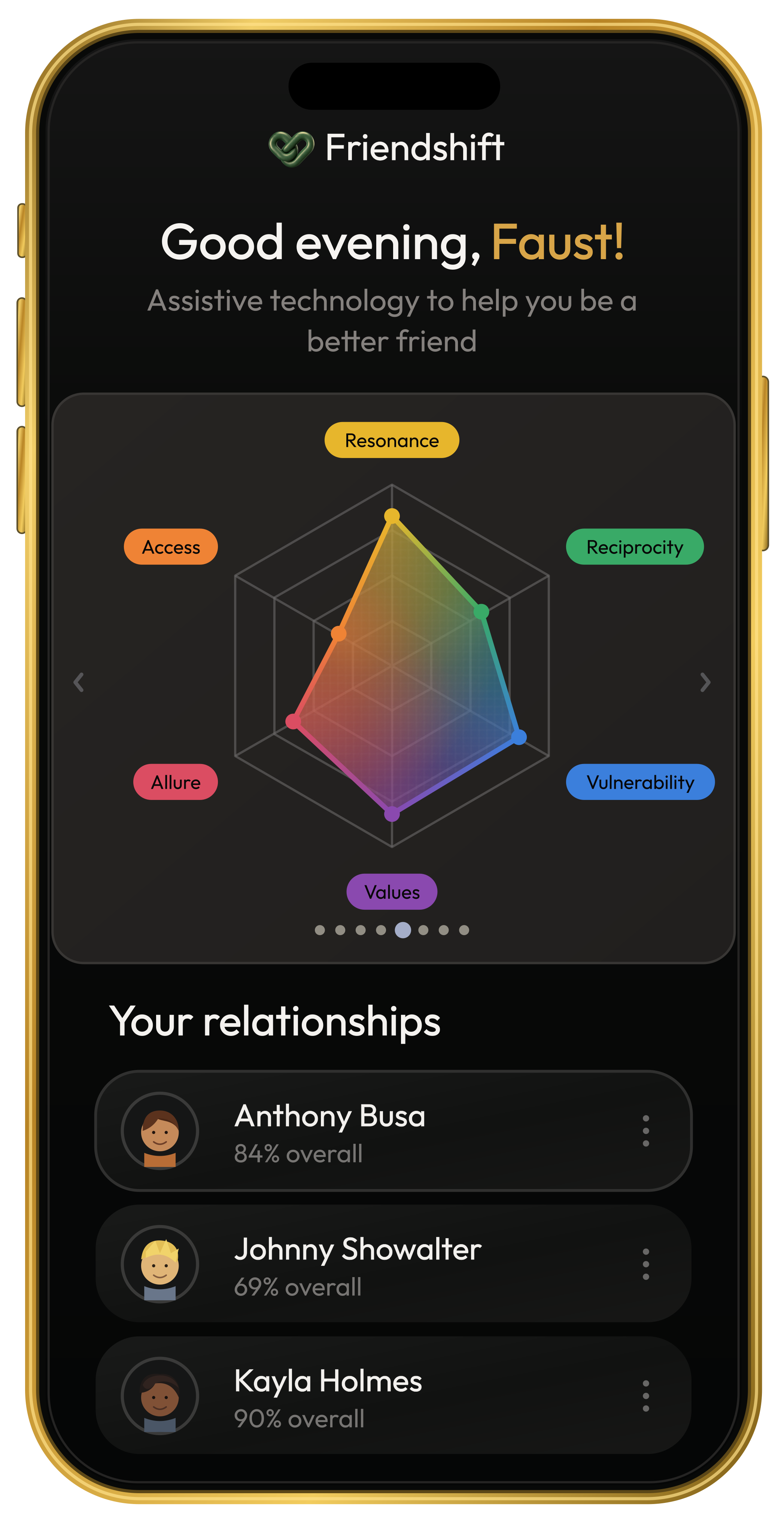
Software: The app maps how each relationship fits, feels, and functions in your life, then prioritizes outreach to help you sustain healthful check-in cadences before drift occurs.
Behavioral Ritual: Tap your phone against a tile when you have time to talk and the app suggests one person to call: confirm the call or shake to reroll the suggestion. Optional pre-call conversation prompts suggest topics to discuss. Post-call check-ins help you track threads and deepen the connection over time.
We apply executive function support principles to relationship maintenance. Friendshift uses physical cues in your everyday environment and cognitive offloading to reduce the intention-action gap, compressing the 12-step decision chain behind most calls — who to call, when, and what to talk about — into just 2 taps.
Calls complement, rather than replace, time together. People we surveyed were five times more likely to say calls led to more in-person time than less.
Friendshift Product-Market Fit Survey (2025; n = 79)

When four of his favorite people married without inviting him to their weddings, Faust Whale reckoned with how much he valued those relationships and how little he acted on that care. As a neurodivergent, multidisciplinary creative who often felt like an outsider, Faust began studying social dynamics as a teenager; in college, he began developing question sets for deeper dialogues, and as an adult he's been experimenting with an outreach system for distributing attention across a broader relationship network. Friendshift turns years of iterations on a private social prosthetic into a scalable consumer product.
Faust’s nonlinear path makes him unusually well suited to build it. He studied Science, Technology, and Society at Stanford and later worked as an intrapreneur on the Rapid Evaluation research and development team at X, the Moonshot Factory (formerly Google [x]). His earlier work spans assistive technology and consumer products: at eight, he invented PaceMate to make remote pacemaker and defibrillator battery checks easier; at fifteen, he licensed his second invention, Needle Beetle, through By Kids for Kids to Mattel, which sold it nationwide. Needle Beetle and Friendshift pair physical devices with behavioral rituals to make difficult things easier: venipunctures in one case, staying in touch beyond what memory and willpower can support in the other.
Faust has never been more motivated by a mission than Friendshift's. Faust is all in on building it into a venture-scale company where social impact and commercial success reinforce each other. Friendshift brings together the work he is best at with a widespread problem he has spent years trying to solve in his own life: helping you close the intention-action gap and be the friend you want to be to more of the people you care about.
Friendshift reduces what you have to remember, decide, and do to stay in touch — making it easier to act on the care you feel across more of your friendships.
You decide who matters and how often you want to check in. We help you follow through on your goals without automating you out of your own relationships.
No feeds or streaks. Success means more meaningful contact and time together, not more time in the app.
Deepen, repair, and sustain the relationships you already value instead of matching you with strangers or bots.
We won’t sell your personal data, show you ads, display your relationships or activity as public metrics.
Join early access and help shape an easier way to stay close. No spam; we won’t sell your data or use it for advertising.